
Water damage restoration
Structural Drying and Dehumidification in the Hudson Valley and Capital Region
Structural drying and dehumidification are two of the six services in H&H Environmental’s water damage restoration. They follow water extraction and the removal of materials that cannot be saved, and H&H monitors the drying process.
Surfaces can look dry before the material behind them is. H&H monitors the drying process.
What drying covers at H&H
Drying is the longest part of a water damage job. These are the three services involved.
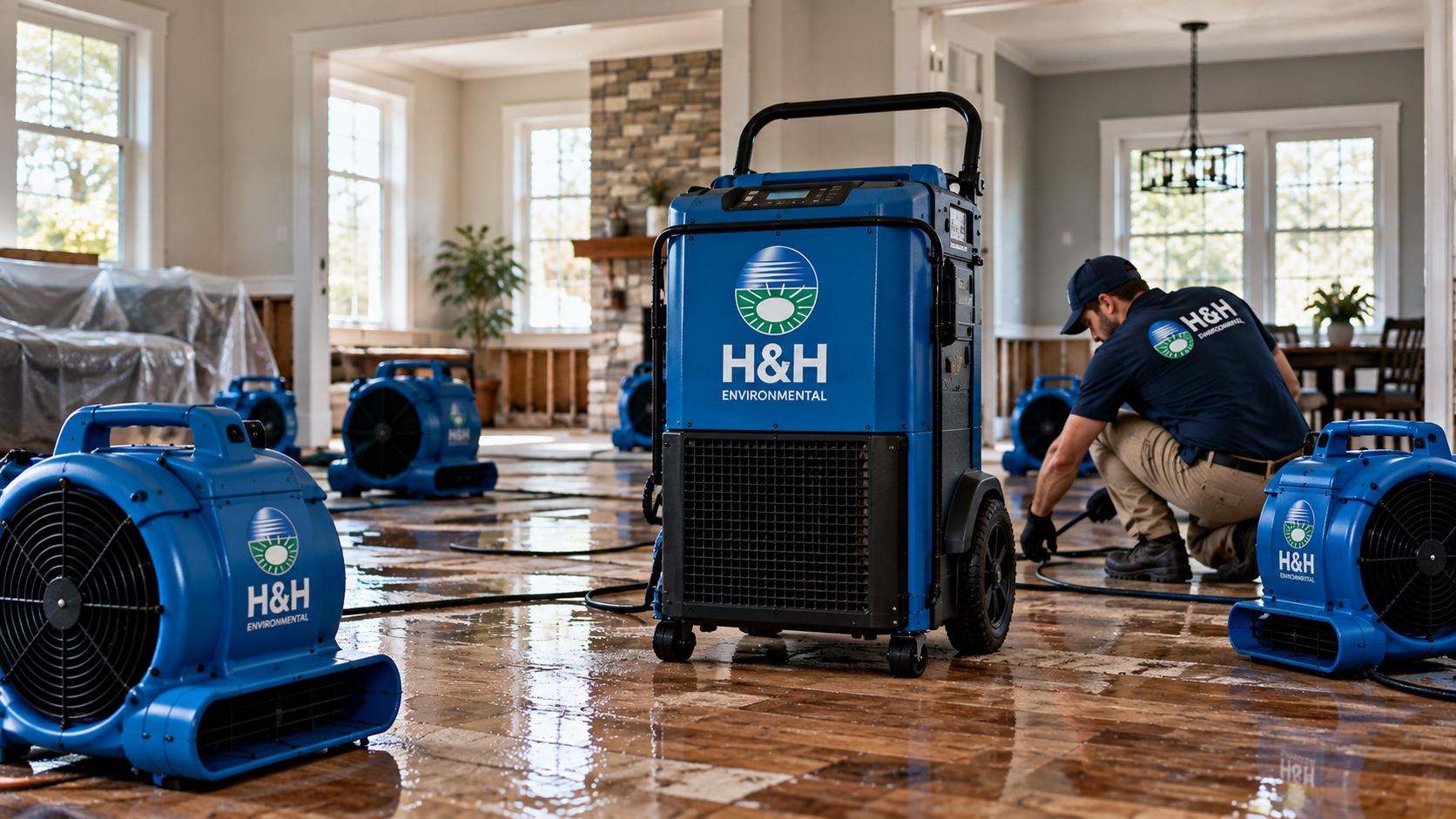
Structural drying
Drying the building structure.
Dehumidification
Controlling moisture in the air while the structure dries.
Monitoring
Tracking the drying process.
How a wet structure dries
Dehumidification
Dehumidifiers pull moisture out of the air so wet materials can release theirs. EPA notes that humid air slows drying (EPA).
Moving air
Moving air across wet surfaces speeds evaporation. EPA suggests opening cabinets and removing drawers and shelves so hidden surfaces can dry (EPA).
Measurement
Moisture meters read the moisture content of walls, flooring and other materials. EPA also suggests keeping indoor humidity below 60 percent, ideally between 30 and 50 percent (EPA).
How long drying takes
Days to weeks
EPA says drying a flooded home usually takes several days to weeks, and that it is worth keeping the air moving even after things look dry (EPA).
The first 24 to 48 hours
EPA advises drying water-damaged areas and items within 24–48 hours to prevent mold growth. When damp materials are dried within that time after a leak or spill, in most cases mold will not grow. That is a target, not a promise.
Why monitoring matters
Drying takes days, and a surface can look dry before the material behind it is. H&H monitors the drying process, which is one of the six water damage services.
What can be dried and what cannot
Often removed
Wallboard and insulation that were underwater, or that are saturated and cannot be dried quickly, usually have to be removed (NYS Department of Health, EPA). H&H removes wet or damaged materials where necessary, which is why that step comes before drying.
A reading, not a guess
A professional can take moisture readings to tell what can be dried in place and what cannot.
What not to do while a structure dries
Do not seal damp surfaces
Do not seal wall cavities that were flooded, and do not paint or seal wet surfaces until you are sure they are dry all the way through (EPA).
Ducts that were underwater
Do not run the furnace blower or central air if the ducts were underwater. Have a professional inspect heating and ventilation systems first (NYS Department of Health).
Guides that go deeper
Insurance
We work directly with your insurance carrier and provide documentation and direct billing for covered losses.
Whether a loss is covered depends on your policy and the cause of the damage. For more on how a claim works, see insurance help.
Frequently asked questions
How long does structural drying take?
It depends on the loss. EPA says drying a flooded home usually takes several days to weeks (EPA), which is why the drying is monitored.
Why does a dehumidifier matter?
Wet materials can only release moisture into air that can take it. EPA notes that humid air slows drying (EPA), so controlling moisture in the air is part of drying the structure.
If a wall looks dry, is it dry?
Not necessarily. EPA says to be sure surfaces are dry all the way through before sealing or painting them (EPA), and moisture meters read what the surface does not show.
Sources
The safety, health and local statements above come from these public sources. This article summarizes them in its own words, so follow the links for the full guidance.
U.S. Environmental Protection Agency
- Flood Cleanup to Protect Indoor Air and Your Health
Sorting materials, drying a flooded home, moisture meters, how long drying takes, when to get professional help. · read October 7, 2026
- A Brief Guide to Mold, Moisture and Your Home
Why moisture control is mold control; the 24–48 hour window; fixing the water problem; sampling, hidden mold, small and large cleanups, hiring a contractor, when a cleanup is finished. · read October 22, 2026
New York State Department of Health
- Flood Cleanup and Home Repair
Standing water, protective gear, what to discard and what can usually be saved, documentation for insurance. · read October 7, 2026
Related help from H&H
H&H focuses on these counties: Ulster, Dutchess, Orange, Columbia, Albany, Saratoga, Fulton, Greene. Call and tell us where the property is, and we will confirm availability.