
First: Is the Basement Safe to Enter?
Before anything else, decide whether you should go down there at all. A flooded basement can hold several hazards at once, and most of them cannot be seen from the stairs.
Other hazards to think about before you go in
- Contaminated water. Floodwater can carry sewage, bacteria and chemicals into a home (EPA). If you do not know where the water came from, treat it as contaminated.
- Fuel oil and gas. If fuel oil is floating on the water, the oil has to be cleaned up before the water is pumped out, and environmental contractors have special equipment for that (NYS Department of Health). If you smell gas, do not use an open flame for light, because gas may be trapped inside (NYS DHSES).
- Structural damage. Check for structural damage before you enter (NYS Department of Health).
- Slips, trips and falls. Water and silt make stairs and floors slick, and EPA lists these among the hazards of re-entering a flooded home (EPA).
- Carbon monoxide. If the power is out, never run a fuel-powered generator inside a home or garage. EPA says to keep generators outside and at least 20 feet from buildings (EPA).
If any of these might apply, stay out and call your utility. EPA notes that flood cleanup can be difficult and dangerous work, and that a professional may be able to help you decide whether it is safe to enter (EPA).
Once it is safe, the minimum protection EPA describes is an N95 respirator, goggles without vent holes, gloves, boots or work shoes, and clothing that covers your skin.
People with asthma or a weakened immune system should stay away from moldy sites and should not take part in flood cleanup, and children and pregnant people should not either (EPA).
Identify Where the Water Is Coming From
Where the water came from changes what you do next, so look for the source once it is safe to do so. Common sources include:
- A burst or frozen pipe, a failed supply line or fitting, or a water heater that has failed. If you can reach the main water valve safely, shut it off.
- A sump pump that failed or stopped when the power went out.
- Groundwater coming up through the floor or in through foundation cracks, often after long rain or snowmelt.
- Heavy rain or storm runoff entering through window wells, doors or the foundation, or a nearby stream or creek rising.
- A backed-up sewer, drain or septic system. If floodwater covers your septic tank or drains are slow, the NYS Department of Health advises not using toilets or washing machines and not having the tank pumped while groundwater is high (NYS Department of Health).
The source matters because water from a clean supply line is a different situation from water that rises from the ground, runs in from outside, or backs up through a drain. Those can carry soil, bacteria, sewage or chemicals, and that affects how the water is handled, what can be saved, and what protective gear is appropriate.
It is not always obvious from looking at the water. If you cannot tell, treat it as possibly contaminated and ask a professional.
Document the Damage Before Cleanup
Photos and video taken before cleanup give you, and your insurance company, a record of what the water did. EPA advises contacting your insurance company and taking pictures of your home and belongings before you start cleanup (EPA). The NYS Department of Health also recommends listing the damage and taking photos or video as you clean up (NYS Department of Health).
What to photograph
- The whole basement, from the stairs or doorway.
- The water level, against a wall, a stair step or a fixed object, where you can see it from a safe spot.
- The source of the water, if you can see it.
- Affected walls, ceilings and flooring.
- Furniture, stored boxes and other belongings.
- The furnace, water heater, electrical panel and other mechanical equipment, from a safe distance.
- Any visible damage, such as stains, cracks or mold.
Whether a loss is covered depends on your policy and on what caused the water. Your insurance company decides that, and your policy or your agent is the place to find out.
The NYS Department of Health suggests setting items you plan to discard outside to dry until the adjuster confirms your losses (NYS Department of Health). For more on how claims work, see insurance help.
Remove Standing Water
Standing water should come out as soon as it can safely be done. The NYS Department of Health notes that water can wick into walls and cause more damage, and that standing water can contain bacteria and mold (NYS Department of Health).
How standing water is removed
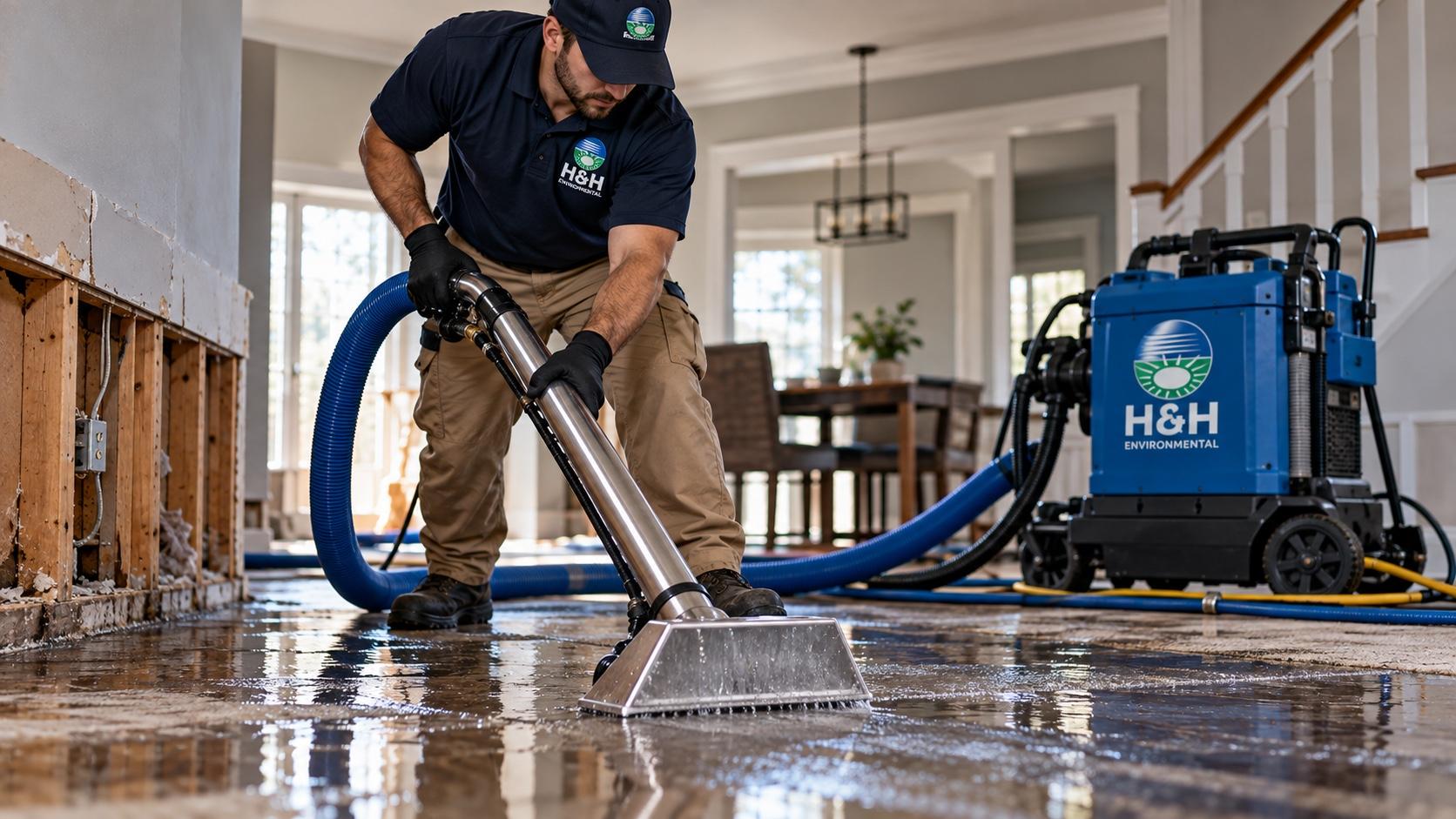
Professionals use pumps for deeper water and extraction equipment that pulls water out of floors, carpet and low areas. A household wet/dry vacuum can help with a small, clean spill. It is not made for inches of water across a basement floor, and plugging anything in around standing water is itself a hazard (see the electrical warning above). This is the work of emergency water extraction.
If fuel oil is on the water
Do not remove standing water until the oil has been cleaned up (NYS Department of Health). That is a job for an environmental contractor.
What Not to Do
- Do not turn on electrical appliances until an electrician has checked the system and the appliances (NYS DHSES).
- Do not use a candle or other open flame for light. Use a battery-powered flashlight (NYS DHSES).
- Do not mix bleach with ammonia or other cleaners. The combination can release poisonous gas (NYS Department of Health).
- Do not run a generator indoors (EPA).
- Do not run the furnace blower or central air if the ducts were underwater. Have a professional inspect heating and ventilation systems first (NYS Department of Health).
- Do not start fans or dehumidifiers over mold you can already see until you have gently cleaned it, because the airflow can spread it (EPA).
- Do not seal wall cavities that were flooded, and do not paint or seal wet surfaces until you are sure they are dry all the way through (EPA).
Dry the Basement, Not Just the Visible Water
Getting the water off the floor is the first half of the job. The second half is drying everything the water touched. Standing water can be gone while moisture remains in drywall, framing and sill plates, the subfloor, insulation, flooring, stored belongings and other porous materials.
Water removal
- Takes out standing and pooled water.
- Uses pumps and extraction equipment.
- Is finished when the water you can see is gone.
Structural drying
- Takes moisture out of building materials and the air.
- Uses dehumidification and controlled air movement.
- Is finished when measurements show materials are dry, not when they look dry.
How professional drying works
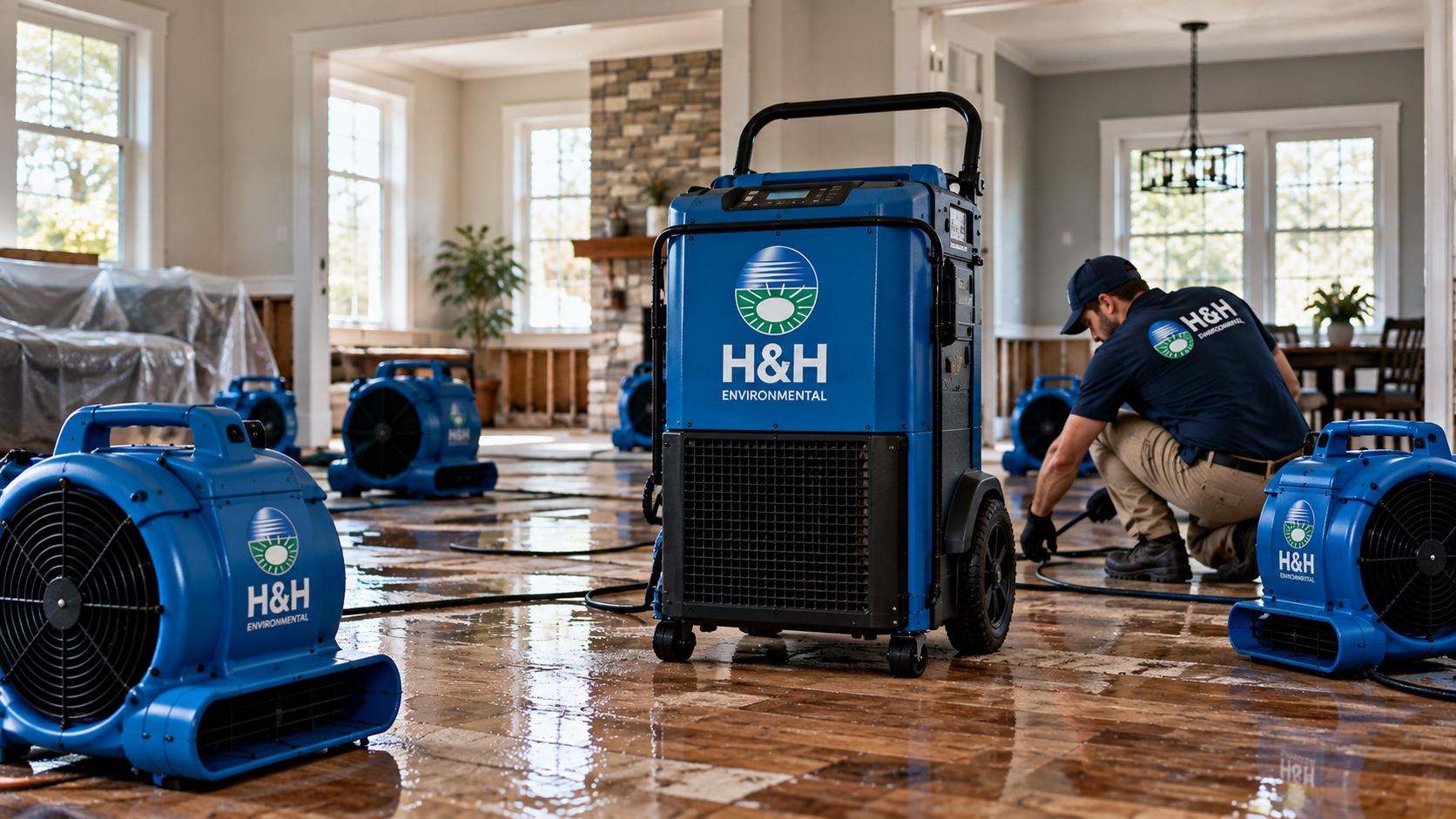
- Dehumidification. Dehumidifiers pull moisture out of the air so wet materials can release theirs. EPA notes that humid air slows drying (EPA).
- Controlled air movement. Moving air across wet surfaces speeds evaporation. EPA suggests opening cabinets and removing drawers and shelves so hidden surfaces can dry (EPA).
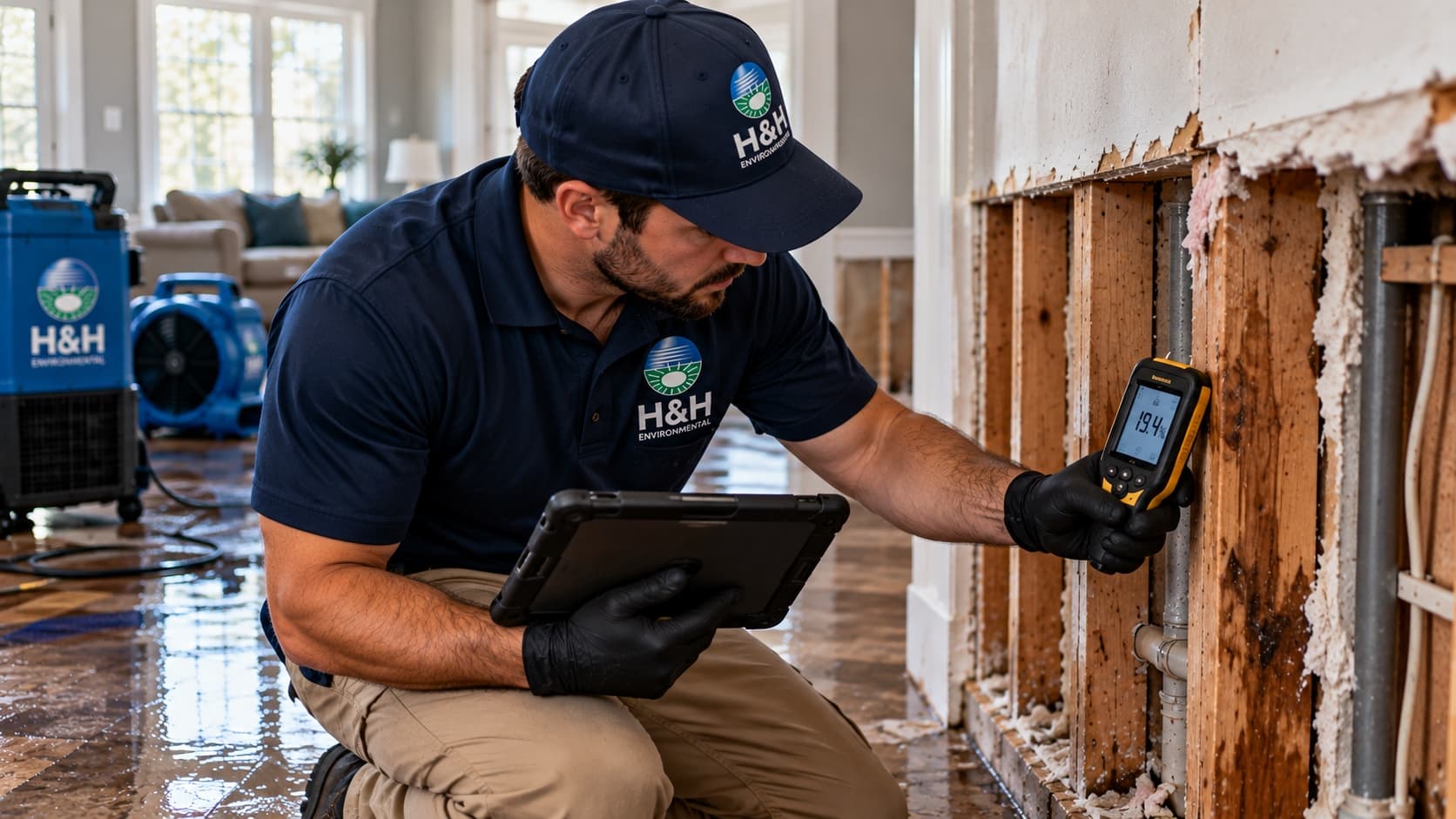
- Moisture measurements. Moisture meters read the moisture content of walls, flooring and other materials. For a concrete slab, EPA describes a simple plastic-sheet check before new flooring goes down (EPA). EPA also suggests keeping indoor humidity below 60 percent, ideally between 30 and 50 percent (EPA).
- Monitoring and adjusting. Readings are repeated over several days, so equipment can be moved or added as conditions change and drying stops when the numbers say the structure is dry.
EPA says drying a flooded home usually takes several days to weeks, and that it is worth keeping the air moving even after things look dry (EPA). That is the reason structural drying is measured rather than judged by eye. H&H does this as part of structural drying and dehumidification.
Why the First 24–48 Hours Matter
EPA advises drying water-damaged areas and items within 24–48 hours to prevent mold growth, and says that when damp materials are dried within that time after a leak or spill, in most cases mold will not grow.
24–48 hours is not a countdown after which mold suddenly appears. It is a critical drying window.
How quickly mold actually starts depends on the material, how wet it is, how long it stays wet, how contaminated the water was, and conditions in the room such as humidity and airflow.
For floods, EPA is more cautious: if you were not able to dry a flooded home and its belongings within 24–48 hours, assume you have mold growth, and throw away materials that got wet and cannot be thoroughly cleaned and dried in that time (EPA).
That is why the order of steps matters: make it safe, stop the source, document, remove the water, then dry quickly and measure. Moisture that is still in the materials after the visible water is gone is what the window is about.
What Can Be Saved After a Basement Flood?
There is no single rule. The answer depends on the material, how long it was wet, and whether the water was contaminated. What follows are general patterns, not a verdict on your basement. If you are unsure about something, have a professional look at it before you throw it out or keep it.
Often more salvageable
- Hard, nonporous items such as metal, glass, hard plastic, china and porcelain, which can usually be cleaned and dried.
- Solid wood furniture in otherwise good condition.
- Concrete floors and foundation walls, which are usually cleaned and dried rather than removed. They can hold moisture, so check that a slab is dry before new flooring goes over it.
- Clothing, textiles and artwork that are not physically damaged, which may be cleaned or laundered.
May need removal
- Wallboard (drywall), wall insulation, wood paneling and wallpaper that were underwater or are saturated.
- Carpet, carpet padding and rugs.
- Wet fiberboard and other materials that soak up a lot of water.
- Upholstered furniture, mattresses and box springs.
- Papers, books and food that touched floodwater.
- Anything soaked by sewage or floodwater that cannot be thoroughly cleaned and dried in 24–48 hours.
Based on guidance from the NYS Department of Health and EPA. Words like “often” and “may” are deliberate: condition, contamination and timing all change the answer.
Photograph items before you discard them (see the documentation section above). EPA notes that a restoration specialist for a particular kind of item may be able to clean and dry something precious (EPA).
What If You Discover Mold After the Flood?
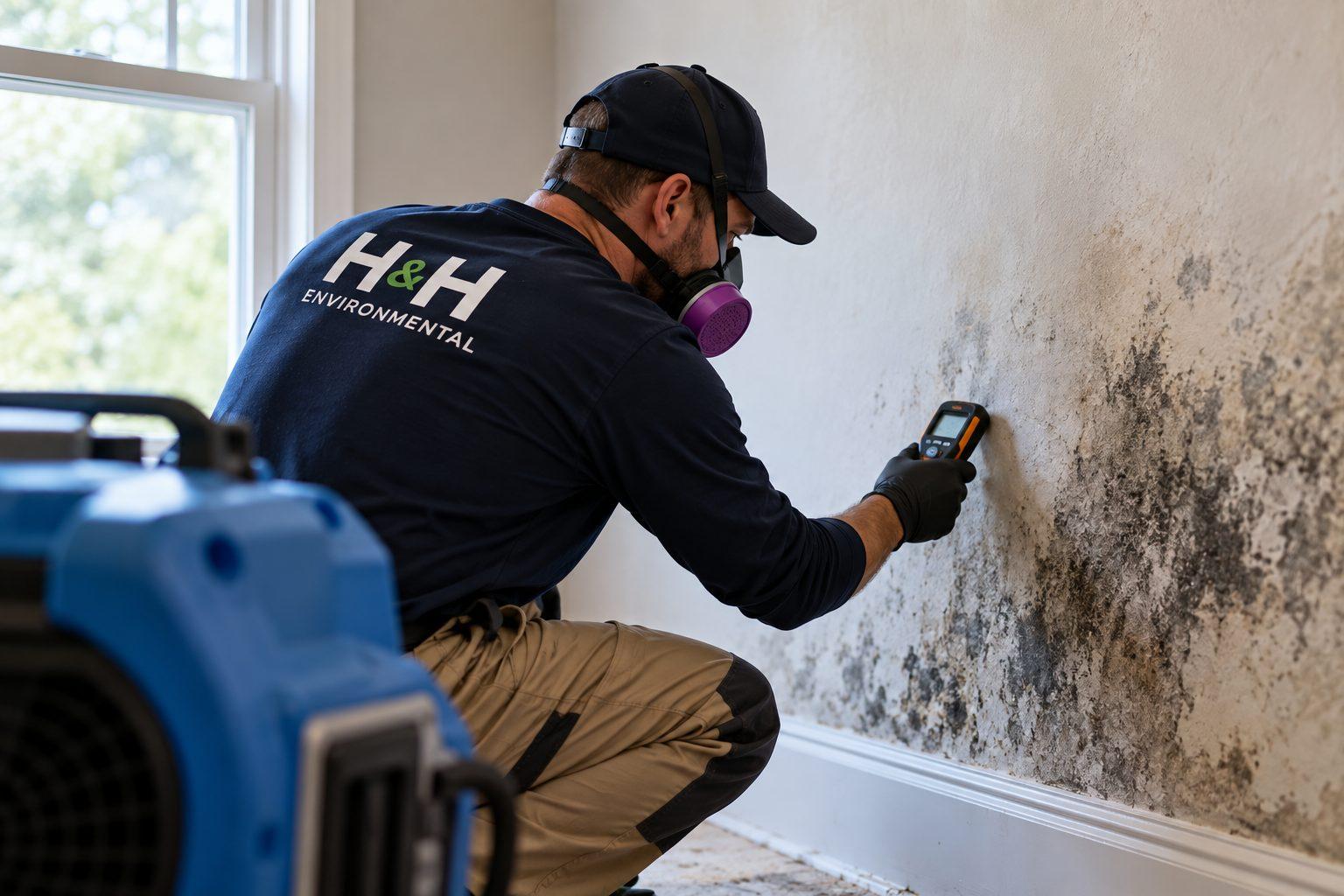
Mold needs moisture. EPA puts it this way: the key to mold control is moisture control. If mold is growing, the water problem has to be fixed too, or the mold will most likely come back.
If you can still see or smell mold, EPA says you have more work to do (EPA).
Finding mold does not mean the water cleanup failed, and how much mold there is, and what to do about it, is a question for a mold assessment, not a guess from the stairs.
If anyone in your household has asthma, a weakened immune system or other health concerns, talk with a healthcare professional, and keep them away from moldy areas (EPA).
What H&H Does on a Basement Water-Damage Call
H&H Environmental has operated since 2005. For a flooded basement, the work falls into these parts. Each is described as a service, not a promise about timing, because every basement is different.
Water extraction. Standing water is removed. (Emergency water extraction)
Removal of wet or damaged materials, where necessary. Materials that cannot be dried are taken out so they do not keep moisture against the structure.
Structural drying and dehumidification. The structure and the air are dried. (Structural drying)
Antimicrobial treatment. Used where it is appropriate.
Monitoring. Drying is monitored so the work continues until the structure is dry.
Documentation and insurance. We work directly with your insurance carrier and provide documentation and direct billing for covered losses. Whether a loss is covered is decided by your policy and your carrier, not by H&H. (Insurance help)
If mold turns up, the mold-role rule above applies. The full list of what H&H does for water losses is on the water damage restoration page.